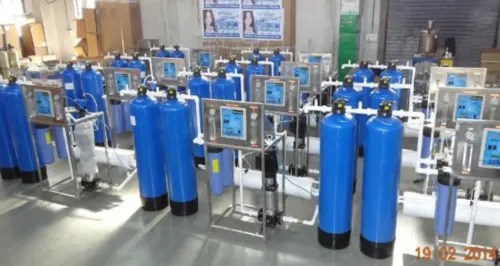
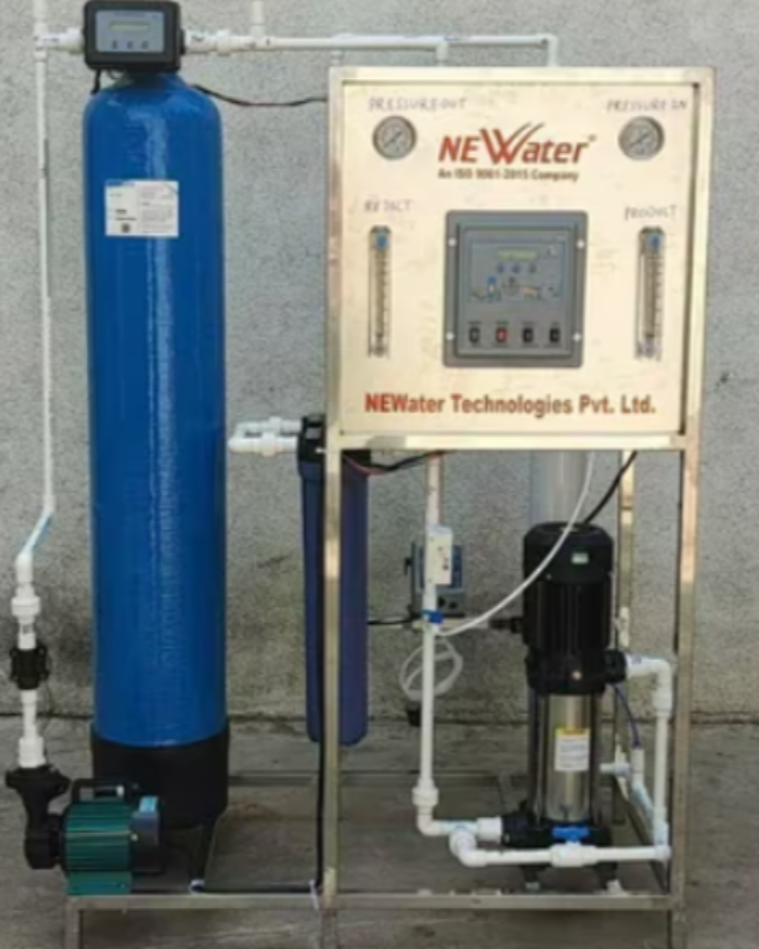
Industrial water requirements can involve high volumes, long operating hours, plus strict process routines. A Fully Automatic Industrial RO Plant can reduce the need for repeated manual intervention by using controls plus instrumentation to manage key operating functions.
Automation is particularly relevant where consistent production, monitoring, plus operational convenience are important.
What Automation Can Manage
The exact automation level depends upon system design.
Functions may include
- Automatic start
- Automatic stop
- Tank-level response
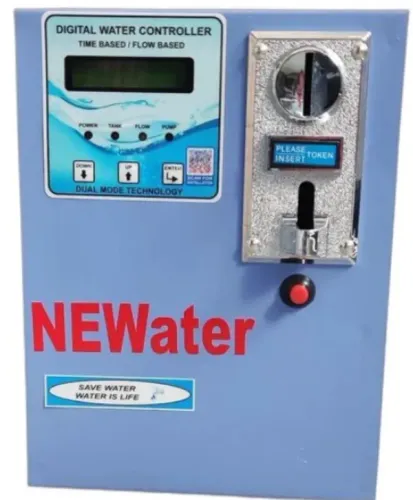
- Pump control
- Low-pressure protection
- High-pressure protection
- Conductivity monitoring
- Flow monitoring
- Alarm functions
- Automatic flushing
These features can support routine operation while helping protect critical components from unsuitable conditions.
Automation Does Not Replace Water-Treatment Design
A sophisticated control panel cannot compensate for incorrect pre-treatment.
Industrial RO performance still depends upon raw-water chemistry, membrane selection, pressure, recovery, filtration, plus feed-water conditioning.
Raw-water analysis should therefore remain the starting point.
When Automatic Operation Becomes Valuable
Automation can be useful in facilities where operators manage several utilities simultaneously.
Manufacturing units, hotels, hospitals, institutions, food facilities, plus commercial complexes may prefer a system capable of responding automatically to treated-water tank levels.
For example, the plant can be configured to start when storage falls to a defined level, then stop when sufficient treated water becomes available.
This can reduce unnecessary manual switching.
Instrumentation Improves Visibility
Operators need information about plant performance.
Pressure gauges, flow indicators, conductivity instruments, plus control displays can help staff identify abnormal operating conditions.
Tracking these readings over time can reveal gradual changes that might indicate filter loading, membrane fouling, pump issues, plus feed-water variation.
Pre-Treatment Protects the RO Section
Industrial plants frequently process water containing hardness, suspended solids, chlorine, plus other contaminants.
Depending upon raw-water analysis, pre-treatment may include media filtration, activated carbon filtration, softening, micron filtration, plus chemical dosing.
Suitable pre-treatment can support membrane performance plus more stable operation.
Maintenance Still Requires Skilled Attention
Fully automatic should never be interpreted as maintenance-free.
Filters require inspection. Membranes require monitoring. Pumps, valves, instruments, plus sensors need periodic checks.
Preventive maintenance should include
- Pressure monitoring
- Flow monitoring
- Conductivity checks
- Filter servicing
- Membrane performance review
- Pump inspection
- Instrument calibration where applicable
- Leakage checks
Automation helps manage operation, yet maintenance remains a human responsibility.
Assess Utility Infrastructure
Before installing an industrial RO system, evaluate raw-water availability, electrical supply, drainage, feed tank capacity, treated-water storage, plus installation space.
Adequate service clearance should also be provided around equipment.
NEWater Technologies Pvt Ltd serves industrial plus commercial water-treatment requirements from Rajkot. Businesses considering a Fully Automatic Industrial RO Plant can benefit from discussing feed-water analysis, production requirement, automation expectations, plus site infrastructure before equipment selection.
Choose Automation for a Clear Operational Reason
Automation should solve a practical requirement rather than simply increase the specification list.
For industries across Rajkot plus Gujarat, useful reasons can include reducing manual switching, protecting equipment, improving monitoring, plus maintaining treated-water availability.
A properly planned Fully Automatic Industrial RO Plant combines suitable treatment design with controls that support day-to-day operations efficiently.
Keywords