A water ATM improves access only when people can obtain tested water reliably, affordably and without depending on a single payment method or a working phone. You will be able to assess the user journey, treatment safeguards, operating capacity and site requirements before deciding whether a kiosk fits a school, factory, village or housing complex.
Key takeaways
- Require a payment receipt and dispensing record for every refill.
- Do not treat purification alone as proof of safe drinking water.
- Review laboratory tests, calibration logs and sanitation records before installation.
- Match kiosk capacity and storage to peak demand at your site.
What happens when someone buys water from a kiosk?
The water ATM user process should take a container from empty to filled with a recorded payment, not stop at an app screen.
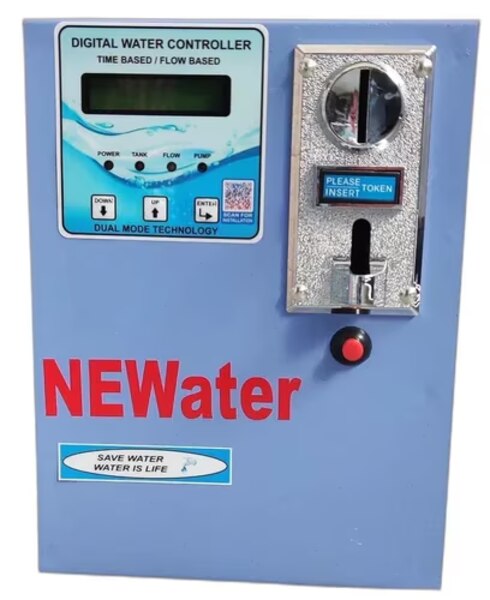
- Register an account or app if required, then scan the machine’s QR code for QR-code water dispensing. Confirm the price per litre, minimum dispense quantity and total charge before authorising payment.
- Check that the kiosk accepts UPI, cards, cash, RFID cards, tokens or subscriptions. Do not assume a UPI water ATM offers cashless and cash payment options.
- Place a clean, compatible reusable container under the nozzle, ensuring its opening does not touch the outlet. Select the quantity, start dispensing and stop at the required level.
- Collect the receipt, transaction ID or updated prepaid balance. Keep it until the water and payment are confirmed.
The operator must publish container charges, prepaid-balance rules, refunds for interrupted dispensing, duplicate payments and failed QR scans. It must also explain what happens during mobile-data outages or power failures, including whether offline transactions are stored and reconciled later.
Accessibility means more than an app. Measure queue time and operating hours; provide instructions in local languages; set the nozzle at a usable height; accept common container sizes; and leave approach space for people with limited mobility.
A fallback token, RFID card or staffed cash route prevents a phone, network or QR failure from becoming a denial of service.
Does treated water from a water ATM prove that it is safe?
No: treated output from a water ATM does not prove safe drinking water. Purified water versus safe drinking water is the difference between a treatment result and verified protection from hazards.
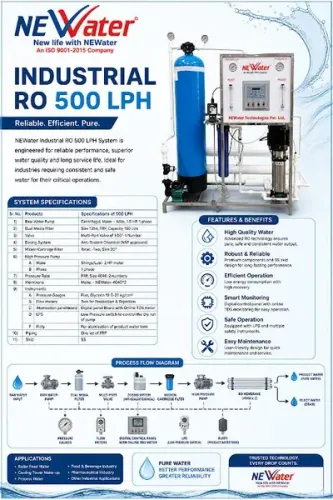
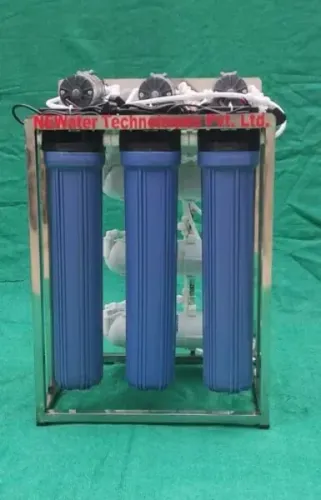
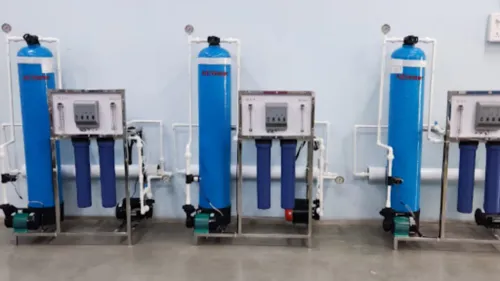
The operator needs a source-water assessment, a treatment train matched to contaminants, hygienic storage and dispensing, final-water testing, and a Water Safety Plan covering hazards, control measures, operational monitoring and corrective actions. A suitable train may include:
- Screening and sediment removal for particles and turbidity
- Activated carbon where chlorine or organic contaminants require reduction
- Softening or antiscalant dosing for hardness, plus iron and manganese control
- Reverse osmosis for selected dissolved contaminants
- UV disinfection, ozone or a compatible disinfectant residual for microbial control
| Measure | What it shows | What it does not prove |
|---|---|---|
| TDS | Total dissolved solids | Safe hardness, fluoride, nitrate, arsenic or microbial results |
| Individual tests | A specific contaminant or hazard | That other hazards are absent |
| Reverse osmosis water ATM | Membrane treatment is operating | Complete disinfection |
| UV disinfection | Microbial inactivation at the delivered dose | Continuing protection after water leaves the reactor |
RO is not a complete disinfection barrier. UV leaves no residual, so storage tanks, hoses, nozzles and bottle contact can recontaminate water. Test turbidity, microbes, hardness, iron, fluoride, nitrate and arsenic separately; low TDS alone does not establish safety.
Which water-quality tests and records should the operator require?
Require baseline and seasonal source-water tests before commissioning and after monsoon, drought or supply interruptions. Borewell, municipal and tanker water can change sharply. Compare feed-water results with contaminant-specific performance data for hardness, iron, fluoride, nitrate, arsenic, microbes and other targets; a generic purification claim is not evidence.
TDS and drinking-water safety are not interchangeable: low TDS does not prove safe water.
Keep a dated water ATM water-quality testing and operations file containing:
- Feed and product flow, inlet and outlet pressure, conductivity, calculated salt rejection, and measured RO recovery rate.
- UV intensity and lamp interlock tests, or disinfectant residual results where a residual is used.
- Filter and membrane change dates, sanitation records, microbiological results, alarms, failed results and corrective actions.
- Reject-water volume and product volume under actual operating conditions. For applicable point-of-use systems, compare production efficiency with the EPA WaterSense benchmark of at least 30%, meaning no more than 2.3 gallons of reject water per gallon produced.
Treat these standards as claim-specific, not as approval of the complete kiosk or its daily operation:
| Standard | What it addresses | What it does not prove |
|---|---|---|
| NSF/ANSI 42 | Aesthetic effects such as chlorine, taste or odour | Removal of every contaminant |
| NSF/ANSI 53 | Specified health-effect contaminant claims | Safe performance with your source water |
| NSF/ANSI 55 | UV microbiological treatment systems | Hygienic storage, dispensing or maintenance |
| NSF/ANSI 58 | Reverse-osmosis systems and listed reduction claims | Complete disinfection or correct operation |
Can one water ATM serve a school, factory or housing complex?
A single kiosk can serve a school, factory or housing complex only when peak demand fits both production and waiting time. Calculate it as: peak users × litres per person × refill frequency during the busiest period. Do not choose by the headline water ATM capacity litres per hour alone.
- Count people likely to refill in the busiest hour, not the total population.
- Set litres per person from observed container sizes and usage.
- Add demand during sanitation, filter changes and expected power or network downtime.
- Compare that demand with product flow, water kiosk storage capacity, dispensing speed, operating hours, queue size and measured RO recovery.
Request these figures for every model:
- Raw-water flow and pressure; product flow in litres per hour; usable storage in litres; reject-water volume and recovery rate.
- Electrical load, generator or battery backup requirement, minimum floor area and drainage capacity.
- Internet or mobile-signal needs, offline operation and transaction recovery after an outage.
Complete the water ATM site requirements before ordering. Check the raw-water connection, RO reject water drainage, level floor, weather protection, lighting, safe access and space for container filling. Add physical protection against vandalism, tampering and unauthorised chemical changes.
A high-capacity unit still fails as an access project when its tank empties before morning demand or queues form during a network outage. Measure actual flows and downtime at commissioning, then resize storage, add a second dispensing point or stagger operating hours if the queue remains excessive.
What should you compare before installing a water ATM?
A kiosk is the right choice only when its treatment, infrastructure and daily operation fit the site. Use this water ATM selection checklist:
- Test source-water chemistry seasonally and define treatment objectives and validated contaminant reduction.
- Require product-water testing, sanitation procedures, storage and nozzle-cleaning records.
- Confirm payment fallback: cash, card, UPI, RFID, tokens or offline transactions.
- Compare price per litre, minimum quantity, container charges, refunds and subscriptions.
- Put uptime, spare-parts availability, remote alarms and service response in the contract.
- Require operator training and a written water ATM maintenance plan, including response time after a failed test.
- Ask suppliers such as NEWater Technologies Pvt Ltd for a site-specific design, model-specific production and storage figures, electrical and drainage drawings, commissioning results and corrective-action process.
A water kiosk comparison should include these alternatives:
| Option | Total effort | Queue and containers | Reject water and accountability |
|---|---|---|---|
| Household filtration | Household maintenance | No refill queue; manage filters | Little reject water; responsibility is domestic |
| Bottled-water delivery | Ordering and storage | Delivery timing; many containers | No treatment reject; supplier records matter |
| Refill station | Travel and refill time | Queue and clean containers | Depends on operator records |
| Piped treated-water point | Network access and repairs | Short collection route; shared containers | Central reject handling; utility accountability |
A water ATM can improve safe drinking-water access when verification, payment access, drainage, uptime and trained operation are designed as one system—not when a machine is installed and left to operate alone.
Related product
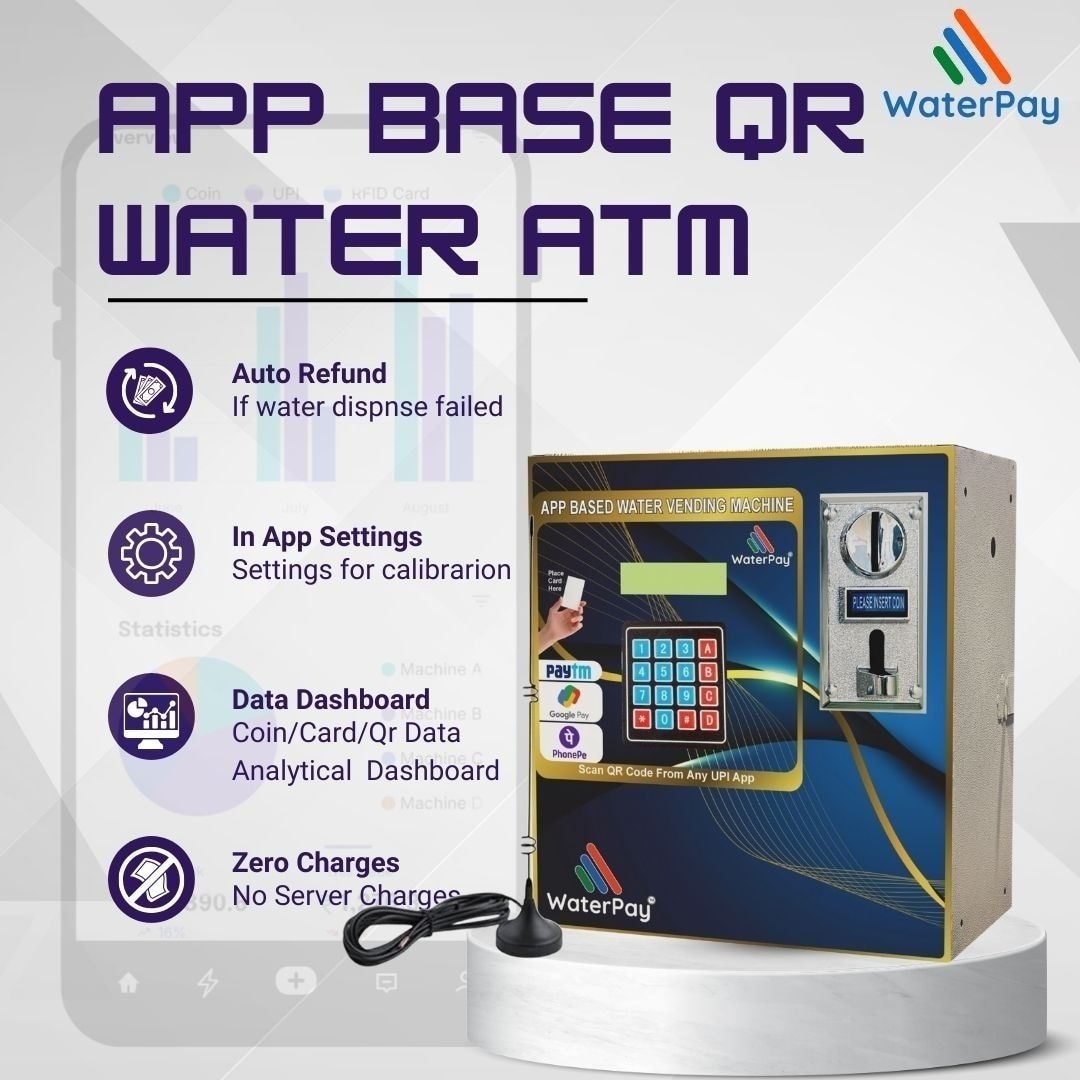 | Water ATM Machine ₹15000 Product Description The Water Pay Water ATM Machine by NEWater Technologies Pvt Ltd provides a smart, automated solution for decentralized safe... View product → |
Frequently asked questions
What happens when someone buys water from a kiosk?
The user selects a volume or payment amount, pays, places a clean container under the outlet and receives dispensed water. The operator should provide a receipt and retain the transaction record.
Does treated water from a water ATM prove that it is safe?
No. Treatment equipment does not prove final water safety. Confirm the output with laboratory testing, inspect the dispensing point and review maintenance, cleaning and filter-replacement records.
Which water-quality tests and records should the operator require?
Require test reports for microbiological quality, total dissolved solids, pH, turbidity and contaminants relevant to the source water. Keep calibration logs, filter-change dates, sanitisation records, source-water reports, batch or dispensing records and complaint logs.
Can one water ATM serve a school, factory or housing complex?
Yes, if its treatment flow rate, storage volume, dispensing rate and operating hours match peak demand. Calculate users, daily consumption, refill patterns, power reliability, maintenance access and backup arrangements before sizing it.
What should you compare before installing a water ATM?
Compare source-water quality, treatment stages, verified output quality, storage and flow capacity, payment and receipt controls, service response, consumable costs, power requirements, sanitation procedures and the records the operator will provide.