A household RO system can reduce dissolved salts and several named contaminants, but it does not make every tap in a home safe or guarantee protection against every hazard. By matching treatment to a water test, sizing the unit correctly and controlling storage, maintenance and reject water, you can decide whether RO is justified and use it safely.
Key takeaways
- Test water before choosing RO, UV, softening or other treatment.
- Use TDS as a screening value, not proof of drinking-water safety.
- Size storage and production for peak household drinking-water demand.
- Replace filters on schedule and protect the clean-water side from contamination.
What happens inside a domestic RO system
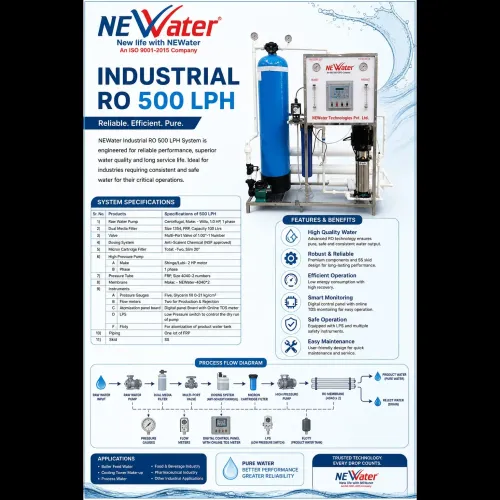
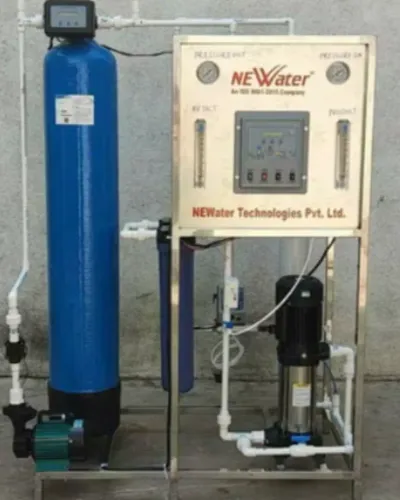
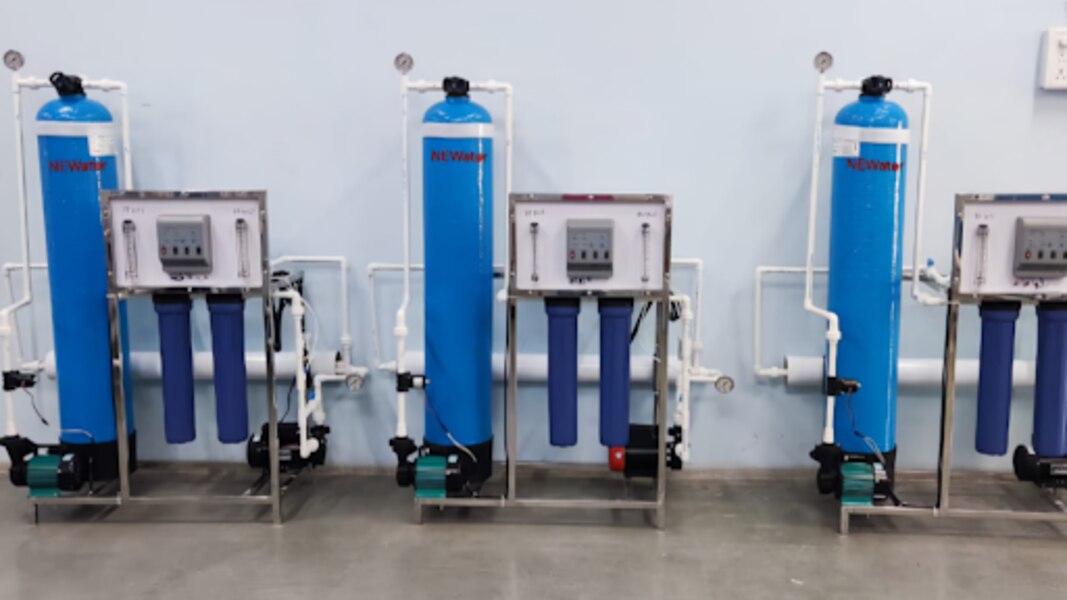
Incoming water moves through several barriers, not one magic filter. A domestic RO system usually sits at one drinking-water faucet, where pretreatment protects the RO membrane before treated water enters a storage tank and reaches the tap.
| Stage | What happens | Contaminants addressed and limits |
|---|---|---|
| Sediment filtration | A porous cartridge traps larger particles. | Removes sand, rust, silt and pipe debris; it does not remove dissolved salts, fluoride, nitrate or microbes. |
| Activated carbon | Carbon adsorbs chemicals and protects the membrane from oxidants. | Reduces chlorine, tastes, odours and some volatile organic compounds; performance depends on contact time and cartridge condition. |
| RO membrane | Pressurised water crosses a semipermeable membrane while much of the concentrated reject stream leaves separately. | Can reduce dissolved salts, sodium, hardness, fluoride, nitrate, arsenic and lead. Verify the model’s contaminant-specific claim; cold water, low pressure, fouling and membrane age reduce flow and rejection. |
| Post-treatment | A final cartridge adjusts taste, and some units add minerals or another barrier. | It does not repair a failed membrane or guarantee disinfection. |
| Storage tank and faucet | Permeate waits in a tank before dispensing. | These downstream parts can support microbial growth if they are dirty, poorly maintained or exposed to untreated water. |
Hardness, iron, manganese, silica and biological growth can scale or foul a membrane, so difficult feed water needs testing and additional control. RO can reduce some bacteria and viruses through physical separation, but it is not a substitute for disinfecting a microbiologically unsafe source.
NSF/ANSI 58 certification helps you check structural safety, TDS reduction, efficiency and stated contaminant claims; it does not mean every certified model removes every listed contaminant.
Choose treatment from a water test, not from TDS alone
A water report—not a TDS number—should decide the treatment. Test source water for TDS, hardness, iron, fluoride, nitrate, arsenic, pH and microbial contamination. TDS reveals the combined amount of dissolved material, but not which contaminant is present or whether a health limit is exceeded.
Test well water at least annually and after flooding, repairs or a source change.
| Option | Best fit | What it leaves behind |
|---|---|---|
| RO | High TDS, hardness, fluoride, nitrate or arsenic, when the membrane has a verified reduction claim | Bacteria risk in tanks and tubing; pretreatment is needed for iron, sediment and oxidants |
| UV | Microbial contamination in clear, low-turbidity water | Dissolved salts, hardness, fluoride, nitrate and metals |
| Ultrafiltration | Bacteria, protozoa and suspended particles | Dissolved salts, fluoride, nitrate and many chemicals |
| Activated carbon | Chlorine, tastes, odours and some volatile organic compounds | Salts, hardness, fluoride and nitrate; it does not reliably disinfect |
| Boiling | Microbial risk during a temporary emergency | Dissolved contaminants; evaporation can concentrate them |
| Bottled water | An immediate alternative when the source is unsafe or treatment is unavailable | Quality depends on the label, supplier, seal and storage |
Choose RO for confirmed dissolved contaminants, not simply a high meter reading. Choose UV or boiling for verified microbial risk; UV requires clear water. An RO membrane is not disinfection, and untreated source water needs evaluation and disinfection under local public-health requirements.
Hardness, iron and biological growth can foul the membrane, so sediment and carbon pretreatment protect performance.
What TDS tells you about drinking-water safety
A TDS reading reveals the combined concentration of dissolved substances in water, usually reported in milligrams per litre or parts per million. A high reading can indicate dissolved salts, hardness or other minerals that affect taste, scaling and RO performance, but it cannot identify the substance or show whether a health limit has been exceeded.
A handheld meter is most useful as a trend check. Compare untreated and treated water, then investigate a sudden rise in product-water TDS because it can indicate declining membrane rejection, a damaged seal or incorrect operation. The number still leaves these safety questions unanswered:
- Does the water contain arsenic, nitrate, fluoride, lead or another contaminant at a harmful concentration?
- Is the water microbiologically safe, or does it contain bacteria, viruses or parasites?
- Does the specific RO model claim reduction for the contaminant found in your test report?
Low TDS does not prove microbiological safety. It also does not prove removal of any particular regulated contaminant, so taste versus safety is a critical distinction: pleasant-tasting water can still require disinfection or contaminant-specific treatment.
Check the model’s contaminant-reduction documentation and NSF/ANSI 58 certification where applicable; certification does not mean the model reduces every contaminant covered by the standard. Test the source water through an accredited laboratory when health risks are possible, rather than treating one TDS number as a complete safety assessment.
Size and install the unit for real household demand
A 25 LPH label does not mean 25 litres will flow from the tap in one hour. Match the unit to your daily drinking and cooking demand, peak use, recovery time and storage capacity. Size for enough production to refill the tank between use periods, not for the brief flow rate at the faucet.
A storage tank covers demand while the membrane is producing water slowly. If your household empties it before the next production cycle, you will get interrupted supply; an oversized tank occupies space and stores water longer than necessary. Keep the tank closed, clean and positioned away from heat.
Check these installation points before choosing the model:
- Measure inlet pressure while other household outlets are running. Low inlet pressure reduces production and can damage performance; excessive pressure requires a pressure regulator.
- Confirm the electrical requirement for a booster pump, including a grounded socket, safe cable routing and protection from leaks.
- Leave the reject line unrestricted and connect it to a protected drain with an air gap or approved backflow protection.
- Verify rated output at your water temperature, pressure and expected feed-water quality.
- Install the treated-water faucet where you will actually use it; a point-of-use unit does not make every household outlet safe.
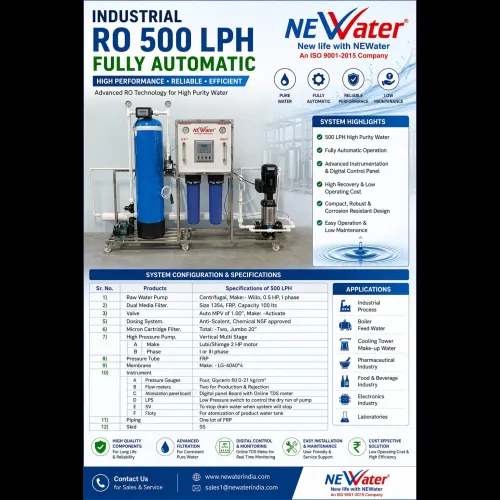
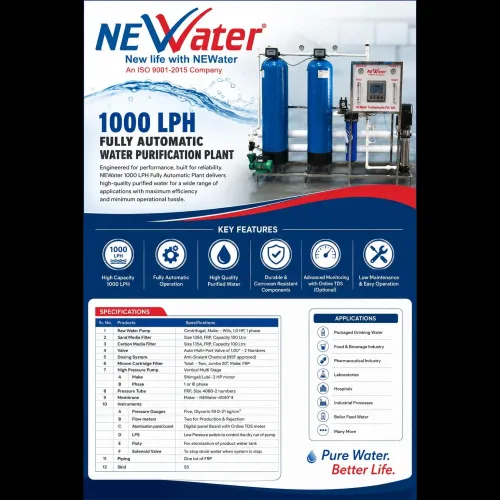
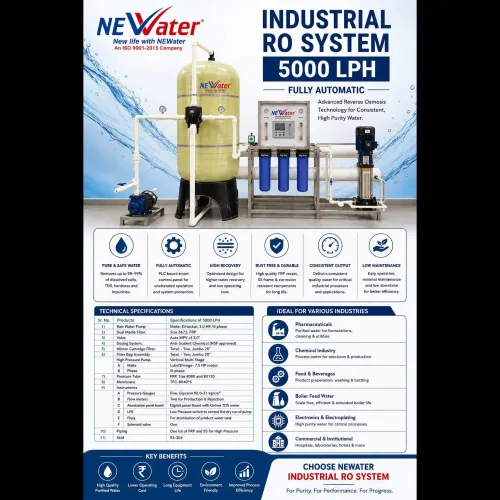
When comparing 25 LPH and 50 LPH commercial equipment, NEWater Technologies Pvt Ltd can help you request output figures under your actual operating conditions rather than choosing by the model name alone.
Control reject water, maintenance and downstream contamination
Reject water is the stream an RO membrane sends to the drain, so track water recovery rather than membrane rejection. Recovery percentage means the share of feed water becoming treated water.
Choose a model with documented performance under NSF/ANSI 58; EPA WaterSense-labelled point-of-use systems use no more than 2.3 gallons of reject water per gallon of treated water.
Reuse reject water for toilet flushing, floor cleaning or watering salt-tolerant plants, but do not drink it or use it for cooking. Connect the drain with an air gap or approved backflow protection, and keep the reject line unrestricted. A blocked line reduces production and can damage the membrane.
- Replace sediment and carbon cartridges at the manufacturer’s rated capacity or sooner if flow drops, taste changes or chlorine reaches the membrane.
- Change the post-treatment cartridge on schedule; an old cartridge can seed the treated-water line.
- Sanitize the storage tank, tubing and faucet during the manufacturer’s service procedure, keeping hands and dirty tools away from open connections.
- Check for leaks, a full tank that refills slowly and a continuously running drain.
The storage tank, faucet, tubing and post-treatment cartridge are downstream microbial-growth locations. Use the RO faucet for drinking water, not an unfiltered mixer tap, and disinfect unsafe source water according to local public-health instructions; RO alone is not disinfection.
For whole-house treatment, specify separate microbial control and maintenance arrangements rather than extending an under-sink unit to every outlet.
Frequently asked questions
What happens inside a domestic RO system?
Water passes through pretreatment filters, an RO membrane and often post-treatment before entering a storage tank and reaching the drinking-water tap.
Is TDS enough to decide whether home water is safe to drink?
No. TDS measures dissolved material but does not identify pathogens or specific contaminants such as nitrate, fluoride, arsenic or lead. Use a water test to choose treatment.
How should you size a domestic RO system?
Estimate daily drinking and cooking demand, account for the unit’s recovery rate and production time, then select storage and output capacity that cover peak use.
How can you reduce contamination after RO treatment?
Replace prefilters and membranes on schedule, sanitise the storage tank and tubing, keep the faucet clean, and prevent untreated and treated water lines from mixing.