A household purifier is easier to live with when its output, water requirements, waste stream and maintenance schedule are known before installation. By checking the technical data, testing the source and planning daily use, you can decide whether the Novo Deluxe configuration will meet your household’s real demand.
Key takeaways
- Test TDS, hardness, iron, turbidity, chlorine and microbes before choosing treatment.
- Match production capacity to peak household demand, not average daily use.
- Check the first glass after installation before drinking or storing treated water.
- Plan reject-water reuse and scheduled filter replacement from the start.
Start with the water source and the figures that determine fit
Before choosing a Novo Deluxe Water Purifier, measure the water entering it and estimate how much treated water your household needs. Record input-water TDS, hardness, iron, turbidity, chlorine and microbiological results; a handheld TDS reading alone will not reveal nitrate, arsenic or bacteria.
Ask for the exact model’s water hardness limit, iron and turbidity limits, feed pressure, operating temperature range and certified contaminant-reduction claims.
| Source | Figures to obtain | Selection consequence |
|---|---|---|
| Municipal supply | TDS, chlorine, pressure and seasonal changes | Carbon capacity and pressure suitability matter; disinfected water is not automatically free of every contaminant. |
| Borewell or well | Hardness, iron, TDS, turbidity, nitrate, arsenic and bacteria | Scale and fouling can exhaust carbon, damage RO performance and shorten UV life; pretreatment may be necessary. |
| Tanker or mixed supply | Source records, TDS, hardness, chlorine and microbial test results | Variable water requires sizing against the worst measured condition, not yesterday’s sample. |
Match demand to rated production and storage. Count morning drinking, cooking and bottle-filling volume, then compare it with the purifier’s rated daily capacity and tank size; a nominal RO membrane rating is not the same as faucet output. Confirm feed pressure, because low pressure, cold water, high TDS or a fouled membrane reduce production.
Ask where the concentrate will drain and include that reject water in your household calculation.
Read the treatment train instead of relying on the word purifier
“Purifier” describes a category, not the treatment. Ask for the exact certified model, RO membrane rating, rated flow and the contaminants each stage is designed to address.
| Stage | Removes or controls | Does not remove |
|---|---|---|
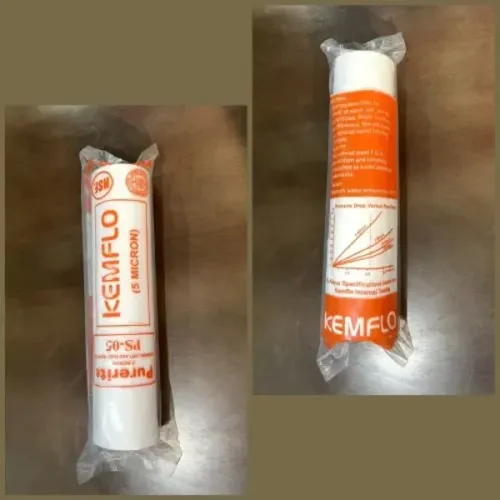
| Sediment filter | Sand, silt, rust flakes and suspended particles | Dissolved salts, hardness, nitrate or microbes |
| Activated-carbon filter | Chlorine, taste, odour and some organic chemicals | Dissolved salts, fluoride, nitrate, hardness or most metals |
| RO membrane | Dissolved salts, hardness, nitrate, fluoride and many metals | It is not a universal barrier for every chemical or volatile compound |
| UV treatment | Microorganisms in water receiving the required UV dose | Sediment, salts, metals, chemicals or hardness |
A sediment cartridge protects later stages but does not soften hard water. Hardness and iron can create scale or fouling, shorten carbon, RO and UV service life, and require pretreatment when testing shows elevated levels. Carbon also protects an RO membrane from chlorine; an exhausted cartridge can look normal while allowing damage.
UV is a disinfection stage, not a filter. High turbidity or a dirty lamp sleeve can shield microorganisms, so pretreatment and cleaning determine whether the intended dose reaches the water. Replace cartridges according to the manufacturer’s time or volume limit, and investigate pressure loss or reduced production rather than waiting for a taste change.
The treatment train, not the word “purifier,” tells you what the water actually receives.
Prepare the installation and verify the first glass
Before drinking, install the feed connection at the inlet-water point, treated-water faucet, storage tank and power supply, then route the reject-water drain securely to an approved waste line. Check every joint for leaks before opening the feed valve.
- Open the inlet slowly and inspect the tubing, drain connection and tank for leaks or kinks.
- Complete filter flushing according to the manufacturer’s instructions. Discard the initial water until carbon dust, preservatives and trapped air have cleared; empty the storage tank for the number of cycles specified.
- Let the tank refill, discard that first stored batch, and collect a fresh glass from the treated-water faucet.
- Measure feed water and treated water with a calibrated TDS meter, recording both readings and the date. A lower product reading confirms salt reduction, not microbiological safety.
- If the supply is from a private well, borewell or tanker, send source and treated samples to a laboratory for bacteria, nitrate, arsenic and other locally relevant contaminants.
Do not accept a normal taste or clear appearance as proof of safe treatment. Confirm that the drain discharges continuously without backing up, and that the storage tank, faucet and post-treatment tubing are clean; contamination after the purifier can spoil an otherwise acceptable outlet sample. Keep the commissioning record for future filter and performance checks.
Plan for peak demand, power cuts and stored water
A purifier will keep up with morning demand only when its usable stored volume covers the rush before production catches up. Compare your peak requirement with the storage-tank capacity, then check the tank refill time using the actual production rate, not the membrane’s nominal rating.
A slow refill leaves the tank empty after one heavy morning.
Ask for these figures for the exact configuration:
- Production rate in litres per hour or litres per day at your feed pressure, water temperature and TDS
- Storage-tank capacity, including the usable volume rather than the tank’s empty shell size
- Tank refill time after the tank is drained
- Recovery rate, expressed as treated-water output divided by feed-water input
Leave a reserve for cooking and drinking during a power cut. If the purifier needs electricity, confirm whether the tank can still dispense by gravity or whether an electrically driven pump stops the faucet. A low recovery rate also sends more reject water to the drain, so check that the drain connection can handle it.
Stored water stays hygienic only when the reservoir is sealed, cleanable and connected to sanitary tubing and a regularly used faucet. Ask how the tank is sanitised, whether the vent is protected, and how long water may stand before a flush is required.
After an extended idle period, discard the first tankful only if the manufacturer’s procedure says to; otherwise follow its specified flushing and sanitisation steps.
Control reject water and maintenance over the life of the unit
Do not route RO reject water to a small drain without checking the recovery ratio and drainage capacity. Collect it for toilet flushing, floor cleaning or other non-drinking uses if its salinity will not damage the fixture; avoid using it on salt-sensitive plants. Measure the daily volume before choosing a reuse container.
Control replacement with the manufacturer’s time or volume limit and operating evidence, not taste alone:
- Replace a sediment cartridge when pressure falls or production slows; clear-looking water does not prove it is open.
- Replace activated carbon on schedule because chlorine and organic chemicals can exhaust without an obvious taste change.
- Plan membrane replacement when output falls, treated-water TDS rises, or testing shows rejection has deteriorated.
Hardness and iron can scale or foul the treatment stages and shorten membrane life. If feed water comes from a borewell, tanker or private well, retest it after installation for microbiological contamination, nitrate, arsenic and other identified risks; a handheld TDS reading cannot detect these hazards.
Ask NEWater Technologies Pvt Ltd to record the installed membrane rating, filter limits, reject ratio and service dates. Include reservoir cleaning, tubing, faucets and rarely used branches in the service plan, because recontamination can occur after the outlet. Schedule service sooner when pressure drop, low production, leaks or hygiene failures appear.
Related product
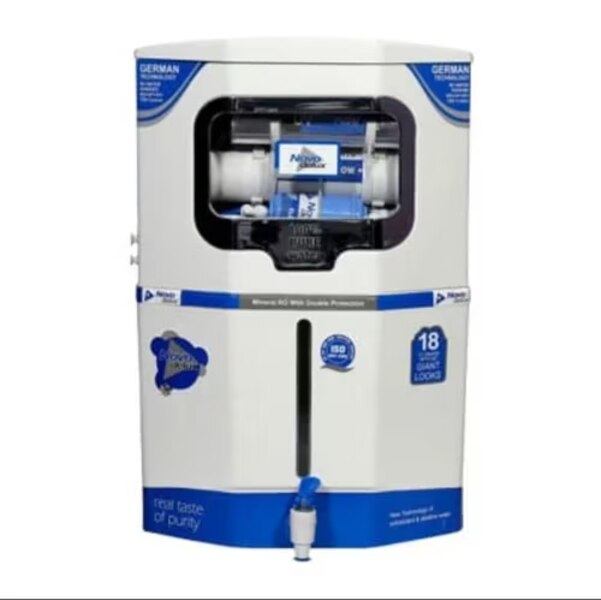
 | Domestic RO System Introducing the Novo Deluxe Water Purifier by Newater India, a cutting-edge solution for clean and purified drinking water. View product → |
Frequently asked questions
Which water tests should you complete before choosing a Novo Deluxe Water Purifier?
Record input-water TDS, hardness, iron, turbidity, chlorine and microbiological results. A TDS meter cannot detect nitrate, arsenic or bacteria.
How do you know whether the purifier suits your household demand?
Estimate daily consumption and measure peak demand, then compare those figures with the purifier’s treated-water production and storage capacity.
What should you verify after installation?
Flush the system as instructed, check connections and reject flow, then test the first treated glass before drinking or filling a storage container.
How can you manage reject water and maintenance?
Collect reject water for suitable non-drinking uses, record filter changes and follow a replacement schedule based on the treatment stages and water quality.